Automotive Sub-Assembly — Speed, Precision, and Supply Chain Reliability
Global Precision Works (GPW) assembles wire harnesses, electrical fixtures, and electromechanical sub-assemblies for U.S. automotive OEMs — with the production consistency, traceability, and USMCA compliance that the automotive supply chain demands.
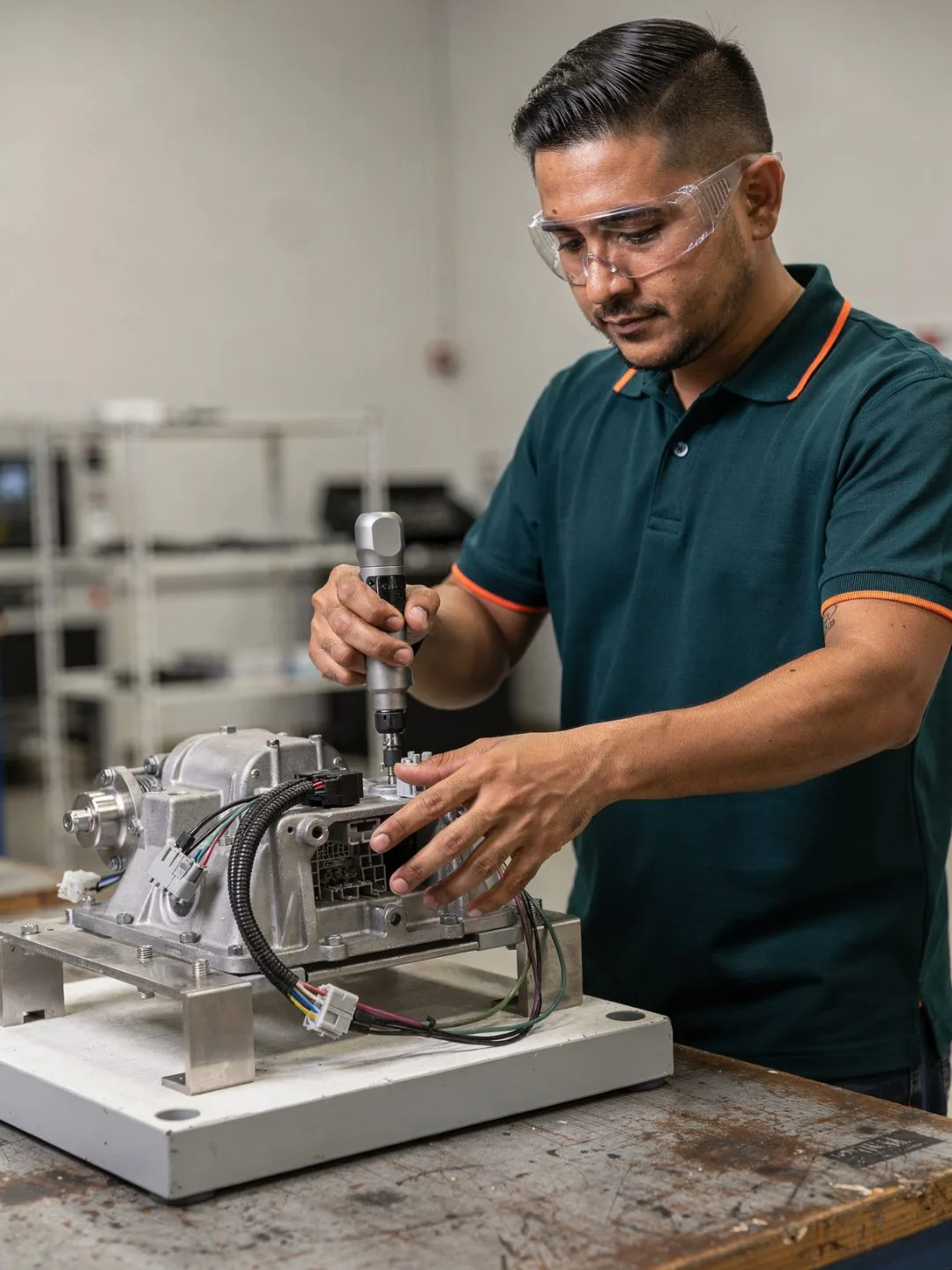
The automotive supply chain does not tolerate late shipments, workmanship defects, or documentation gaps. Every sub-assembly that feeds into a vehicle production line must arrive on time, built to specification, and traceable to the component level — because a single defective harness or misrouted cable can halt a line that produces hundreds of vehicles per shift.
GPW assembles automotive sub-assemblies with that standard as the baseline. Our Monterrey facility builds wire harnesses, electrical fixtures, bracket-mounted sub-assemblies, and integrated electromechanical modules for Tier 1 and Tier 2 OEMs. Every program runs on documented procedures, every unit passes through defined quality gates, and every assembly ships with the traceability records that automotive quality standards require.
This is not general contract assembly adapted for automotive. GPW positions itself for mid-complexity sub-assembly work — the electromechanical builds that require more skill and process control than simple manual assembly, but do not require the massive capital investment of stamping lines or injection molding. Wire harnesses, fixture assemblies, sensor integration, control modules, and cable routing — built right, every time, and delivered on an automotive schedule.
What Is Automotive Sub-Assembly?
Automotive sub-assembly is the process of integrating electrical, electromechanical, and mechanical components into finished sub-assemblies that feed into vehicle production lines or Tier 1 module builds — wire harnesses, electrical fixtures, sensor modules, control units, bracket-mounted assemblies, and cable routing systems. It takes individual components — conductors, connectors, terminals, brackets, PCBAs, sensors, and fasteners — and builds them into a tested, documented unit ready for integration into the next stage of the automotive manufacturing process. For OEMs and Tier 1 suppliers, contract sub-assembly with a nearshore partner transfers labor-intensive build operations to a cost-competitive facility while maintaining the quality standards and delivery reliability that automotive production schedules require.
Automotive Supply Chains Are Shifting — Nearshore Sub-Assembly Is the Response
The automotive industry is in the middle of a structural shift. Trade policy changes, tariff exposure on components sourced from Asia, and the lessons of pandemic-era supply chain disruptions are pushing OEMs and Tier 1 suppliers to regionalize their supply base. USMCA rules of origin requirements incentivize North American content, and procurement teams are actively seeking Mexico-based suppliers who can absorb sub-assembly work that was previously done offshore or in higher-cost domestic facilities.
At the same time, vehicle electrification and the integration of advanced driver-assistance systems (ADAS) are increasing the electrical content in every vehicle. More sensors, more wiring, more control modules, more sub-assemblies — all requiring skilled assembly labor that is scarce and expensive in the United States. The demand for wire harnesses alone is projected to grow as electric and hybrid vehicles require significantly more complex harness architectures than their internal combustion predecessors.
Continue reading Show less
For Tier 1 and Tier 2 suppliers, the math is straightforward. Domestic sub-assembly costs are rising. Offshore sub-assembly introduces lead times and logistics complexity that conflict with just-in-time delivery expectations. Mexico — and specifically Monterrey, with its deep automotive manufacturing ecosystem and proximity to Texas — offers the cost advantage of nearshore production with the delivery reliability of a domestic supplier.
GPW operates in that space. Focused on mid-complexity electromechanical sub-assemblies, positioned in Monterrey, and built to deliver on automotive timelines.
What GPW Builds — Harnesses, Fixtures, and Electromechanical Modules
GPW assembles automotive sub-assemblies across a range of product types, from standalone wire harnesses to fully integrated electromechanical modules. Every program operates under documented procedures with defined quality gates and full component traceability.
Wire Harness Assembly
Wire harnesses are the nervous system of every vehicle — and one of the most labor-intensive components in automotive manufacturing. GPW builds wire harnesses on custom assembly boards: conductor cutting and preparation, terminal crimping with crimp force monitoring, connector housing insertion, branch routing, tape and conduit application, and continuity testing of every circuit.
GPW's harness assembly covers both low-voltage signal harnesses and higher-current power distribution harnesses. Crimp tooling is validated per the connector manufacturer's specification, and crimp quality is verified through cross-section analysis at defined intervals. Every completed harness passes 100% electrical testing on a dedicated test fixture before shipment.
Electrical Fixture and Bracket Assembly
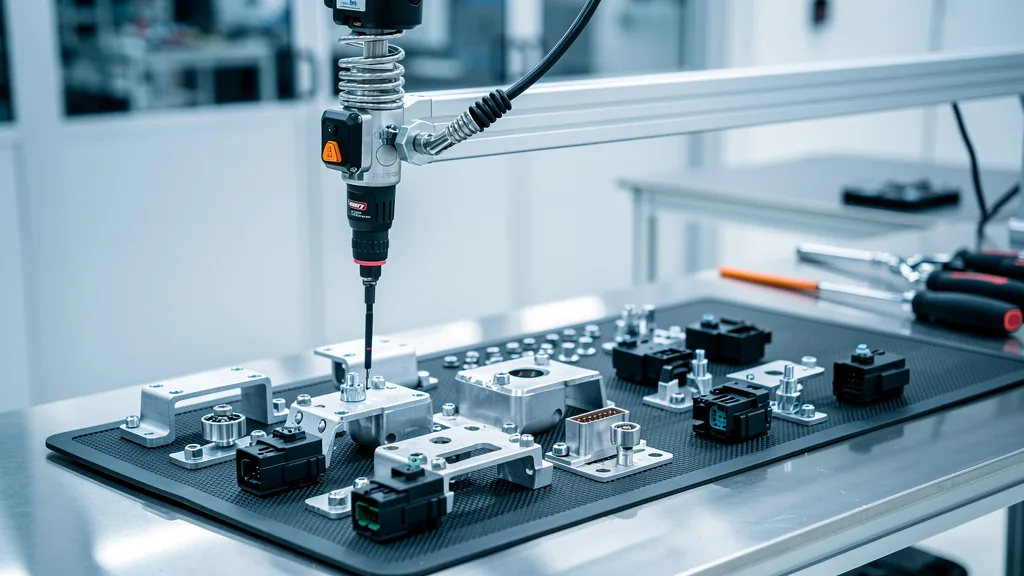
Automotive sub-assemblies frequently combine electrical components with mechanical mounting structures — sensor brackets, relay mounting plates, fuse box assemblies, and connector panels that OEMs mount into vehicle body structures or Tier 1 modules. GPW assembles these fixtures: component mounting with torque-controlled fastening, wire routing and termination, labeling, and functional verification.
For programs requiring custom assembly fixtures, GPW designs and builds tooling as part of the program launch process — jigs, holding fixtures, and poke-yoke devices that ensure correct assembly sequence and prevent operator error.
Control Module and Sensor Integration
Modern vehicles contain dozens of control modules and sensor packages distributed throughout the vehicle architecture. GPW integrates PCBAs into housings, installs connectors, applies conformal coating or potting where specified, and performs functional testing against the OEM's test specification. Sensor integration covers mounting, wiring, calibration verification, and output validation.
Cable Routing and Electrical Integration
Some automotive programs require cable routing and electrical integration within larger assemblies — instrument panel sub-structures, door modules, or engine compartment harness routing into bracket systems. GPW performs this integration work: cable routing per the OEM's routing specification, clip and tie-down installation, connector mating, and circuit verification.
GPW applies this same wire harness and electromechanical integration discipline across other industries — including industrial equipment and telecom hardware — which means your automotive program benefits from assembly processes refined across thousands of builds and multiple quality frameworks.
Machined Automotive Components, Coordinated Through One Accountable Partner
Beyond assembly, GPW coordinates precision machining for the brackets, fixtures, and machined sub-assembly components your automotive programs depend on — produced through a vetted network of Monterrey machine shops. GPW owns the engineering (DFM), quality governance, material sourcing, and delivery, so you sign one contract and hold one partner accountable. Capacity scales with your volume across the network, without the bottleneck of a single shop. And if your Tier 1 supplier base already operates in Mexico, GPW integrates into your existing logistics network — shorter routes, lower freight cost, no new lanes to qualify.
Machining Processes for Automotive Components
The network handles 3- to 5-axis CNC milling and CNC turning for mid-complexity automotive work — sensor brackets, mounting plates, fixture and jig components, bushings, fittings, and machined parts that feed directly into GPW's in-house sub-assembly lines. GPW scopes every job against your drawings, routes it to the shop matched to the geometry and volume, and holds the build to the same release schedule as the assembly program — and once a part is qualified, it stays with the same shop and the same proven process from prototype through ramp, so there is no re-qualification and no surprises at scale. Volume ranges from validation prototypes to recurring production runs, with cost discipline applied through DFM at the quote stage. Capacity grows across the network by adding shifts and machines, not by relaxing process controls, and volume ramps are planned during the PPAP phase so capacity is in place before the program needs it.
Materials the Network Machines for Automotive
Automotive components run across heat-treatable steels (4140, 4340), free-machining steel (1018), aluminum 6061-T6 for lightweight brackets and housings, stainless 304 for corrosion-exposed parts, brass 360 for high-volume turned fittings, and engineering plastics such as Delrin and Nylon 6/6 for bushings and wear components. GPW owns material selection and sourcing behind the network: DFM reviews recommend the right alloy or substitution for cost and function, and material is procured against mill certifications traceable to heat lot — not left to individual shop discretion.
Quality, Documentation & Accountability
Quality governance stays with GPW across every shop in the network. GPW defines the inspection plan, performs dimensional verification against your drawings, and compiles the documentation package — first-article reports, material certifications, and process records traceable to each part.
In production, critical dimensions run under SPC every shift, and an out-of-spec reading triggers immediate containment before parts move downstream.
GPW's quality system runs on documented workmanship and inspection standards and supports PPAP-style submissions (process flow diagram, control plan, FMEA, dimensional results, material certs, MSA, SPC capability data, and appearance approval where the part requires it), so qualification documentation arrives complete. We align to the quality requirements each customer program defines.
Prototype Lead Times and Materials
Design validation moves fastest when the prototype behaves like the production part. The network machines functional prototypes in production materials — aluminum, steel, brass, stainless — not 3D-printed substitutes, with 1–2 week lead times for design validation. Real material properties, real fit, real function: what you validate is what ramps.
Ongoing Cost Reduction & Value Engineering
OEMs demand cost-down every year, and GPW treats that as part of the service, not a negotiation. Engineering runs continuous DFM analysis on your active parts — tolerance relaxation where function allows, material substitution, part consolidation, and setup reduction across the network — and brings savings proposals to you proactively, not just when you ask.
GPW responds to every RFQ within 48 hours with an initial program assessment.
Get a Quote for Your Automotive Sub-Assembly Program Get a Quote for Your Automotive Sub-Assembly ProgramWhat a Typical Automotive Sub-Assembly Program Looks Like at GPW
Automotive programs run on fixed schedules with zero tolerance for delivery failures. Here are three representative examples that illustrate how GPW manages the production discipline that automotive OEMs require.
Engine Compartment Wire Harness
A Tier 1 supplier produces an engine compartment wire harness used across 3 vehicle platforms for a major U.S. automaker. Each harness variant contains 40-80 circuits, uses high-temperature rated conductors, and terminates in 12-18 connectors with sealed housings for engine bay environmental protection.
GPW assembles all 3 variants on dedicated harness boards. Assembly covers conductor preparation, terminal crimping with force monitoring, connector loading, branch routing on the assembly board, protective conduit and tape application, and 100% electrical testing on a custom test fixture that validates every circuit for continuity, isolation, and correct pin-out. Monthly volume: 3,000-5,000 harnesses across all variants with weekly delivery to the Tier 1 supplier's assembly plant.
ADAS Sensor Bracket Assembly
An OEM produces a bracket-mounted sensor module used in an advanced driver-assistance system. Each assembly integrates a stamped steel bracket, a radar sensor unit, a wiring connector with a short pigtail harness, and mounting hardware. The assembly must meet tight positional tolerances because sensor alignment directly affects ADAS performance.
GPW assembles the module on a custom fixture that controls sensor position relative to the mounting bracket. Assembly includes bracket preparation, sensor mounting with torque-controlled fastening, pigtail harness routing and termination, and a functional test that validates sensor output and connector integrity. Monthly volume: 8,000-12,000 units with daily shipments to the OEM's vehicle assembly line.
Instrument Panel Electrical Sub-Assembly
A Tier 1 supplier builds instrument panel modules that integrate climate controls, display interfaces, and electrical distribution. The supplier outsources the electrical sub-assembly — a harness with integrated relay board, connector panel, and ground distribution bar — that installs into the instrument panel structure at the Tier 1 facility.
GPW builds the electrical sub-assembly: harness fabrication, relay board mounting, connector panel assembly, ground bar installation, and a functional test that validates every circuit, relay operation, and ground path. The sub-assembly ships in custom packaging designed for the Tier 1's line-side delivery system. Monthly volume: 1,500-2,500 units with twice-weekly delivery.
Why Monterrey for Automotive Sub-Assembly — Cost, Compliance, and JIT Delivery
Monterrey is already one of the largest automotive manufacturing clusters in North America. GPW operates within that ecosystem — with access to the skilled labor pool, supplier networks, and logistics infrastructure that automotive OEMs expect from a Mexico-based assembly partner.
USMCA-Compliant Production
Sub-assemblies built at GPW qualify for USMCA preferential tariff treatment. For automotive OEMs managing rules of origin compliance, nearshore assembly in Mexico adds North American content that supports regional value thresholds — an increasingly important consideration as trade policy enforcement tightens.
Cost Advantage Without Quality Compromise
Labor costs in Monterrey are 40-60% lower than comparable U.S. operations. For labor-intensive programs like wire harness fabrication and fixture assembly, that cost advantage translates directly to lower per-unit costs. GPW maintains automotive-grade quality standards regardless of cost position — the savings come from labor cost structure, not from cutting quality corners.
JIT Delivery Capability
GPW is 2 hours from Texas by road. Finished sub-assemblies reach Texas-based consolidation points in 1-2 days by truck — compatible with just-in-time delivery schedules that automotive production lines require. That proximity eliminates the inventory buffer that offshore lead times demand and gives your supply chain the flexibility to respond to schedule changes within days.
Automotive Labor Ecosystem
Monterrey's manufacturing workforce includes thousands of operators experienced in automotive assembly processes. GPW recruits from this talent pool and provides program-specific training that covers the OEM's quality requirements, workmanship standards, and production procedures.
Supply Chain Diversification
Adding GPW as a nearshore sub-assembly source diversifies your supply base. Run programs in parallel across locations, shift volume in response to demand signals, or transition work from constrained domestic facilities — the model adapts to your supply chain strategy.
For automotive OEMs and Tier 1 suppliers who need USMCA-compliant sub-assembly with JIT delivery, Monterrey is not a compromise. It is a competitive advantage.
Quality Systems Built for Automotive Accountability
Automotive quality is binary — the sub-assembly either meets specification or it does not. There is no margin for “close enough” when the part feeds into a vehicle production line. GPW's quality system enforces that standard at every step.
Process Documentation
Every assembly operation follows documented work instructions displayed at the workstation. Operators execute each step in defined sequence, with verification gates between stations. Visual work instructions reduce ambiguity and support consistent execution across shifts.
Error-Proofing
GPW designs poke-yoke devices and fixture-based controls into assembly processes wherever the OEM's failure mode analysis identifies risk. These mechanisms catch errors at the point of origin — preventing incorrect assembly sequence, wrong component installation, and missed operations before the unit reaches end-of-line test.
Crimp Quality Control
For wire harness programs, GPW validates crimp tooling per connector manufacturer specifications and monitors crimp force on every terminal. Cross-section analysis at defined intervals confirms crimp geometry meets the dimensional requirements specified in the automotive standard.
100% Electrical Testing
Every wire harness and electrical sub-assembly undergoes 100% functional testing on a dedicated test fixture. Testing covers continuity, isolation, hi-pot (where specified), and correct pin-out verification. Test results are recorded and linked to the individual assembly by serial number.
Traceability
Component lot numbers, operator identification, assembly dates, and test results are traceable to every individual unit. GPW's traceability system supports recall readiness and root cause investigation — standard expectations in the automotive supply chain.
Quality & Documentation
- Documented workmanship and inspection standards across all harness, cable, and control module programs
- Documented work instructions, control plans, and FMEAs governing every assembly operation
- First-article inspection, in-process checks, and dimensional inspection reports against documented criteria
- Material certifications, certificates of conformance, and full serialized lot traceability on every build
- We build to the documentation, traceability, and inspection requirements your automotive program defines, supported by program-level quality plans and PPAP documentation
Automotive
Sub-Assembly FAQ
GPW builds wire harnesses, electrical fixtures, bracket-mounted sensor assemblies, control modules, connector panels, cable routing sub-assemblies, and integrated electromechanical modules. Programs range from standalone harnesses with 20 circuits to multi-component assemblies integrating PCBAs, sensors, and mechanical structures for Tier 1 and Tier 2 suppliers.
Every build follows documented workmanship and inspection standards, with first-article inspection, in-process checks, and full traceability. Quality practices include documented work instructions, process FMEAs, control plans, MSA studies, and PPAP capability. We align to the quality requirements each customer program defines.
Yes. GPW ships from Monterrey by truck, reaching Texas distribution points in 1-2 days. Production scheduling aligns with your release schedule, and delivery frequency adjusts to match line-side consumption rates -- from weekly consolidated shipments to daily deliveries for high-volume programs.
Every harness assembled at GPW passes through 100% electrical testing on a dedicated test fixture. Testing validates continuity on every circuit, isolation between circuits, and correct pin-out at every connector. Test results are recorded and traceable to the individual harness by serial number.
GPW supports the production part approval process with dimensional reports, material certifications, process flow diagrams, control plans, FMEA documentation, and sample submissions. The engineering team works with the OEM through each PPAP phase to ensure all deliverables meet the submission level the customer specifies.
GPW uses a formal engineering change order workflow. The engineering team assesses impact on assembly process, materials, tooling, and test fixtures, then implements changes with documented effectivity that aligns with the OEM's change management timeline. Most changes integrate into production flow without line interruption.
Yes. Sub-assemblies built at GPW in Monterrey qualify for USMCA preferential tariff treatment. GPW maintains detailed records of component origin and assembly location to support the OEM's USMCA compliance documentation and regional value content calculations required for shipments into the U.S..
Ready to Nearshore Your Automotive Sub-Assembly to Monterrey?
Whether you are launching a new sub-assembly program, scaling an existing harness operation, or looking for a USMCA-compliant alternative to offshore production — GPW is ready to build.
Our Monterrey facility handles wire harness fabrication, fixture assembly, sensor integration, control module builds, electrical testing, and packaging — under one roof, one quality system, and one program manager who works your hours.
Send us your requirements. A program manager will respond within 48 hours with an initial assessment.
No commitment. No minimum order. Engineering-driven quoting.