Medical Device & Equipment Assembly — Documented Precision, Built for Patient Safety
Global Precision Works (GPW) assembles medical devices, electromedical equipment, and diagnostic sub-assemblies for U.S. OEMs — with the process control, documentation rigor, and traceability that regulated medical products demand.
Medical devices exist at the intersection of precision engineering and patient safety. Every cable termination, every fastener torque, every solder joint inside a medical product must be executed correctly — because the consequences of an assembly defect are not just financial. They are clinical.
GPW assembles medical devices and equipment with that reality as the governing principle. Our Monterrey facility builds medical products under controlled conditions, following documented work instructions and inspection criteria. Every assembly step is traceable, every test result is recorded, and every unit ships with a documentation package that supports the OEM’s regulatory submissions.
This is not general-purpose assembly adapted for medical work. GPW designs its medical assembly programs from the ground up: controlled work environments, qualified operators trained on medical device requirements, validated test procedures, and a quality system that treats documentation as a deliverable — not an afterthought. Your medical product is assembled with the discipline that regulators expect and patients deserve.
What Is Medical Device Assembly?
Medical device assembly is the process of integrating mechanical, electrical, electromechanical, and optical components into finished medical devices, sub-assemblies, or equipment — diagnostic instruments, patient monitoring systems, electromedical devices, surgical support equipment, and laboratory automation systems. It takes individual components — PCBAs, sensors, displays, cables, enclosures, actuators, and structural parts — and builds them into a tested, documented, and traceable unit that meets the OEM’s design specifications and applicable regulatory requirements. For medical OEMs, contract assembly with a qualified partner transfers the build process to a facility with the process controls, quality systems, and documentation practices that regulated products require.
Medical Device Complexity Is Increasing — Assembly Quality Cannot Be Compromised
The medical device industry is evolving rapidly. Devices are becoming more complex — integrating digital connectivity, embedded software, advanced sensors, and miniaturized electromechanical systems into products that must meet increasingly stringent regulatory and quality-system requirements. Medical device manufacturing imposes documentation and process-control demands — spanning design controls, validation, and traceability — that extend from design through manufacturing and post-market surveillance.
For U.S. medical device OEMs, this creates a capacity challenge. Building medical devices in-house requires dedicated cleanroom or controlled environments, trained personnel, validated processes, and a quality management system that withstands regulatory audit. Maintaining that capability at scale — while also investing in R&D and market development — stretches resources thin.
Continue reading Show less
Offshore assembly introduces different risks. Long supply chains reduce responsiveness when design changes are needed, and regulatory oversight becomes more difficult when the assembly facility is 12 time zones away. A medical OEM needs visibility into its manufacturing process — the ability to audit the facility, review documentation, and resolve quality issues in real time.
The result is growing demand for nearshore assembly partners who combine regulatory-grade quality systems with geographic proximity. Medical OEMs need a partner who understands that a device history record is not optional paperwork — it is a regulatory requirement that follows the device through its entire lifecycle. A partner who treats traceability not as an add-on feature, but as a foundational element of every assembly program.
GPW is building that capability. With documented workmanship and inspection standards, controlled assembly environments, and a documentation-first approach to every program, GPW provides the assembly infrastructure that medical OEMs need — two hours from Texas.
What GPW Builds — Devices, Sub-Assemblies, and Electromedical Equipment
GPW assembles medical products across a range of complexity levels, from single sub-assemblies to fully integrated equipment builds. Every program operates under controlled conditions with documented procedures, trained operators, and full traceability.
Electromedical Equipment Assembly
Electromedical devices — patient monitors, therapeutic equipment, diagnostic instruments, and imaging sub-systems — integrate sensitive electronics with mechanical structures, displays, user interfaces, and power systems. GPW assembles these products following procedures built around electrical safety, leakage-current control, grounding integrity, and EMC compatibility — the controls electromedical equipment demands.
Assembly covers PCBA integration into enclosures, display and interface installation, power supply wiring, cable harness routing, sensor integration, and functional verification against the OEM’s device master record. Every unit undergoes electrical safety testing before shipment.
Diagnostic and Laboratory Device Assembly
Laboratory and point-of-care diagnostic devices require precision assembly of optical, fluid-handling, electronic, and mechanical systems. GPW assembles these devices with attention to alignment tolerances, contamination control, and calibration requirements specified by the OEM. Assembly processes are validated to ensure repeatability across production volumes.
Medical Cable and Harness Assembly
Medical cables and harnesses connect sensors, electrodes, displays, and processing units within devices and between devices and patients. GPW builds medical cable assemblies to documented workmanship and inspection standards with additional controls for biocompatibility-rated materials, strain relief validation, and continuity verification. Every cable assembly is tested for electrical integrity and labeled for traceability.
Medical Device Sub-Assemblies
Not every medical program requires a complete device build. GPW assembles sub-assemblies — sensor modules, display units, motor-driven mechanisms, power distribution boards, and control modules — that the OEM integrates into their final device at their own facility or at a final assembly location. Sub-assembly programs follow the same documentation and traceability standards as complete device builds.
Controlled Assembly Environment
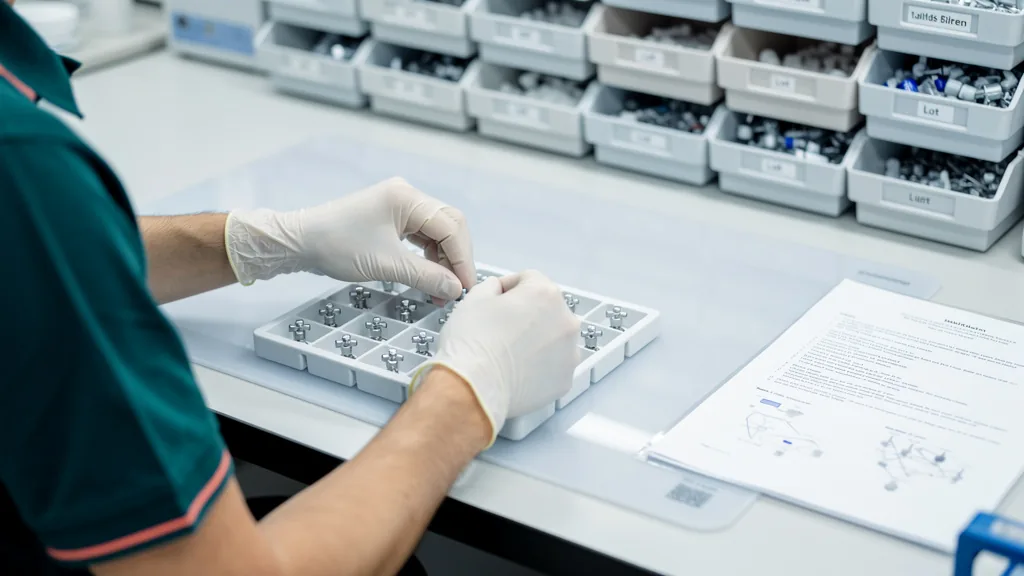
Medical device assembly requires environmental controls that general manufacturing does not. GPW provides controlled work environments with defined temperature and humidity ranges, particulate monitoring, ESD-protected workstations, and restricted access. Operators working on medical programs complete device-specific training and follow gowning and hygiene protocols appropriate to the product’s risk classification.
Machined Device Components, Documented to Medical Spec — Through One Accountable Partner
GPW coordinates precision machining for medical-device OEMs through a vetted network of Monterrey machine shops, while owning the engineering (DFM), quality governance, material sourcing, and delivery. Machined housings, instrument components, and implant-adjacent parts arrive with the controlled documentation a medical program requires — one contract, one accountable partner, scalable capacity without a single-shop bottleneck. The same partner then assembles and tests those parts in-house, so machined components and finished devices answer to one supplier.
Machining Processes for Medical Devices
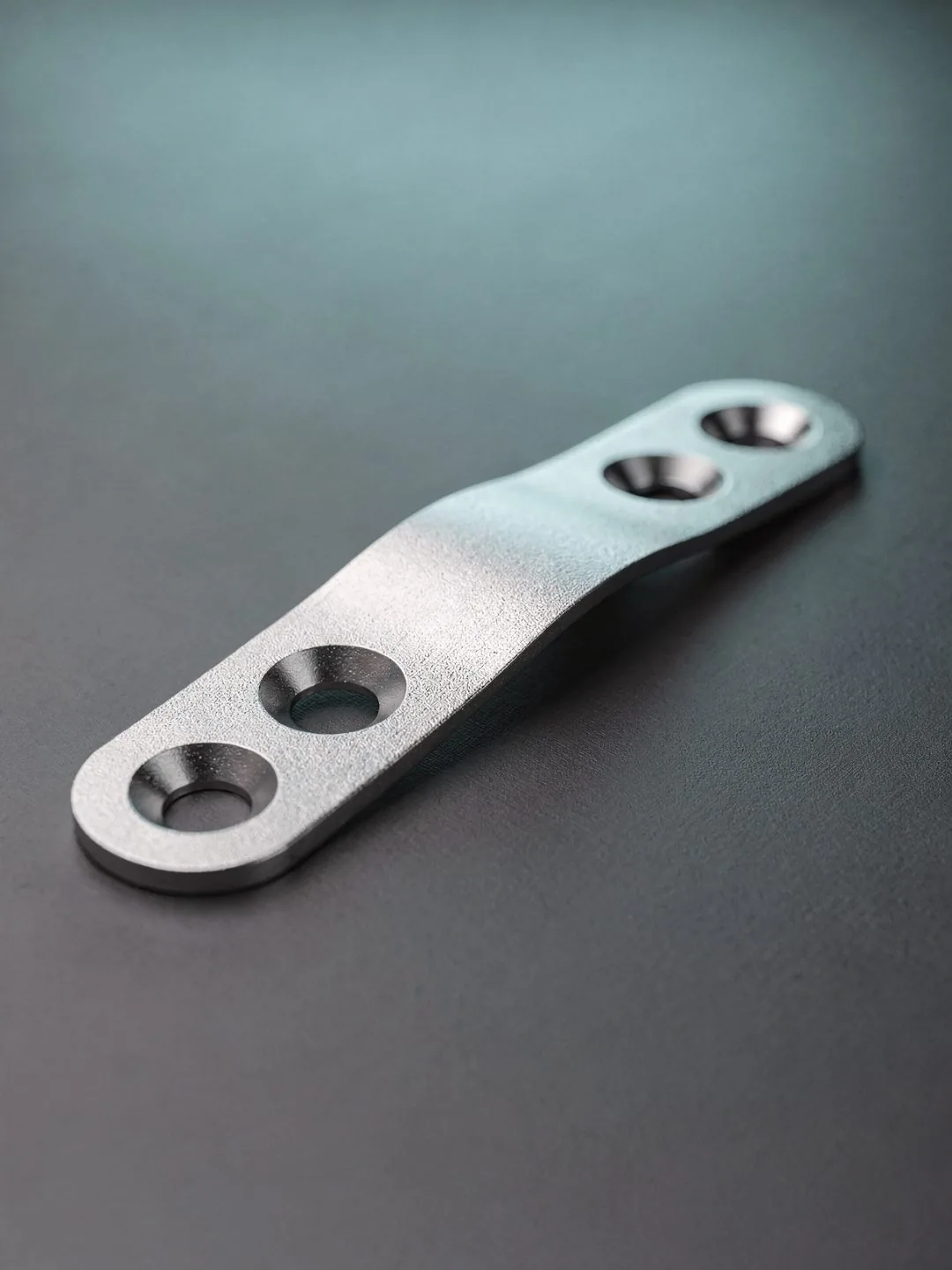
The network covers 5-axis milling for device housings and contoured instrument bodies, Swiss and CNC turning for cannulas, pins, and threaded components, and wire EDM for burr-free instrument features with no heat-affected zone. In practice that means orthopedic plates milled to anatomical contours, bone screws turned with micron-level concentricity, and surgical blade profiles cut in hardened stainless — the geometry surgeons depend on. GPW scopes each process to the part during a DFM review and routes it to the shop qualified for that geometry, finish, and material. Surface finishing — electropolishing and passivation per ASTM A967 on every stainless part — is specified and verified against your drawing, not left to interpretation.
Materials the Network Machines for Medical Devices
GPW owns material selection and sourcing behind the network, so biocompatible materials reach the shop floor with the right certification. Titanium per ASTM F136 and ASTM F67, surgical stainless 316L per ASTM F138, and implant-grade PEEK (Invibio PEEK-OPTIMA, Solvay KetaSpire) are sourced with mill certs and ISO 10993 biocompatibility documentation tracked from the mill forward. Material decisions — when 17-4PH outperforms 316L, when PEEK replaces titanium — are resolved during DFM, before a chip is cut, and the chosen material is locked to the documentation package.
Grade selection follows the application. Titanium Grade 2 (ASTM F67, commercially pure) suits non-structural implants, bone plates, and hardware; Grade 5 (Ti-6Al-4V ELI per ASTM F136, 130 ksi) osseointegrates and carries load-bearing implants — spinal cages, hip and knee components — while staying radiopaque for surgical visibility. Stainless 17-4PH (190 ksi heat-treated, biocompatible) handles high-strength instrument components, forceps, and clamps; 440C (60 HRC, holds an edge) serves cutting edges, blade inserts, and wear surfaces in surface-contact applications only. Beyond PEEK, the network machines Delrin/acetal (FDA food-contact rated, autoclavable) for drug delivery components, instrument handles, and guides, and Ultem/PEI (biocompatible, rated past 1,000 autoclave cycles) for sterilizable housings, reusable connectors, and instrument trays.
PEEK gets its own machining discipline: implant-grade stock runs with dedicated tooling strategies, controlled cutting parameters, and careful chip management to keep surfaces free of contamination, with full lot traceability maintained throughout.
Quality, Documentation & Accountability
Quality governance stays with GPW across every shop in the network. Critical features are inspected 100% with CMM and GD&T verification — not sampled; every implant, every instrument, every critical dimension is measured. Parts trace to material lot, process, and operator, and each lot ships with a Device History Record — mill cert, ISO 10993 docs, process records (machine, operator, date, tooling), dimensional and Ra verification, cleaning verification, and a signed Certificate of Conformance — complete and retrievable, not assembled on request. GPW operates documented, audit-ready quality procedures and aligns to the quality requirements each customer program defines. One partner answers for the documentation, regardless of which shop ran the job.
Surface finish is measured per drawing — Ra 0.8 µm as-machined, Ra 0.4 µm with finish passes, Ra 0.2 µm via electropolishing for implant-grade surfaces — and parts ship clean: double-bagged when specified, no oils, no chips, no handling marks. Clinical trial quantities of 10–100 parts are machined from certified material with the same full DHR documentation, every part traceable to material lot, process, and inspection data — ready for regulatory submission.
GPW responds to every RFQ within 48 hours with an initial program assessment.
Get a Quote for Your Medical Device Assembly Program Get a Quote for Your Medical Device Assembly ProgramWhat a Typical Medical Device Program Looks Like at GPW
Medical device programs demand higher documentation rigor and tighter process control than most other industries. Here are three representative examples that illustrate how GPW handles that discipline.
Patient Monitoring System Assembly
A U.S. medical device OEM produces a patient monitoring system used in hospital settings. Each unit integrates a display assembly, a main processing PCBA, multiple sensor input modules, a power supply, an internal cable harness, and an injection-molded enclosure. The device is classified under FDA Class II and requires full device history records.
GPW assembles the complete unit: enclosure preparation, PCBA installation, display mounting, cable harness routing and termination, sensor module integration, and a functional acceptance test that validates every patient parameter input, display output, alarm function, and communication interface. Each unit ships with a device history record documenting every assembly step, operator identification, component lot numbers, and test results. Monthly volume: 150-300 units across 2 configuration variants.
Laboratory Diagnostic Instrument Sub-Assembly
An OEM designs a bench-top diagnostic instrument that uses optical sensing to analyze fluid samples. The instrument contains a precision optical module, a fluid-handling mechanism, a thermal control system, a processing PCBA, and a user interface display. The OEM assembles the final instrument but outsources the optical module and fluid-handling sub-assemblies.
GPW builds both sub-assemblies. The optical module requires alignment verification against the OEM’s optical specification, contamination control during assembly, and functional testing that validates detection sensitivity. The fluid-handling sub-assembly requires leak testing, flow verification, and material traceability for all wetted components. Monthly volume: 200-400 sub-assemblies per type with quarterly volume adjustments based on instrument demand.
Electromedical Equipment Cable Assembly Program
An OEM produces a family of electromedical treatment devices that use patient-connected cables with specialized connectors. Each cable assembly must meet stringent patient-leakage-current limits, use biocompatibility-rated jacket materials, and pass continuity and hi-pot testing at 100% inspection.
GPW builds the cable assemblies: conductor preparation, connector termination, overmolding (via qualified supplier), strain relief installation, labeling, and electrical testing including leakage current measurement. Every cable ships with a test certificate documenting continuity, insulation resistance, and leakage current results traceable to the individual assembly by serial number. Monthly volume: 1,000-3,000 cable assemblies across 6 variants.
Why Monterrey for Medical Device Assembly — Proximity, Control, and Regulatory Access
Medical device OEMs need more from an assembly partner than cost savings. They need process visibility, audit access, and the ability to manage quality in real time. Monterrey delivers all three — along with the cost advantage that makes nearshoring financially compelling.
Audit-Accessible Proximity
GPW’s Monterrey facility is a short flight from most major U.S. cities. Medical OEMs can conduct supplier audits, witness production runs, and review quality system documentation in person — without the travel burden and time zone complications of offshore facilities. For a regulated industry where supplier oversight is a regulatory expectation, proximity is not a convenience. It is a compliance enabler.
Cost-Competitive Quality
Labor costs in Monterrey are 40-60% lower than comparable U.S. medical assembly operations. For labor-intensive programs — device assembly, cable harness production, complex integration — that advantage reduces per-unit cost while maintaining the process control and documentation standards that medical products require. USMCA compliance provides preferential tariff treatment for assemblies shipped to the United States.
Same-Timezone Responsiveness
Design changes, CAPA investigations, and production hold decisions happen in real time when your assembly partner works the same business hours. GPW’s program managers communicate with U.S. engineering and quality teams without overnight delays — critical in an industry where a quality hold can affect patient access to a device.
Regulatory-Aligned Quality System
GPW’s quality system is built on documented procedures and audit-ready documentation. Documentation practices, process validation, change control, and CAPA procedures follow the structure that medical device regulators expect. When your auditor visits, the system is recognizable.
Supply Chain Continuity
Nearshore assembly reduces the supply chain disruption risk that offshore medical device manufacturing carries. Shorter lead times, faster response to demand changes, and a diversified production footprint give medical OEMs the resilience that single-source offshore strategies cannot provide.
For medical device OEMs who need audit-accessible assembly with regulatory-grade documentation, Monterrey is not a compromise. It is a compliance advantage.
Quality Systems Designed for Regulatory Scrutiny
Medical device quality is not a marketing claim — it is a regulatory obligation. GPW’s quality system is designed from the ground up to meet the documentation, traceability, and process control standards that medical device regulations require.
Documented Quality Processes
All medical assembly processes follow documented workmanship and inspection standards. This includes documented quality procedures, management review, internal audit programs, and continuous improvement processes, with audit-ready documentation aligned to the quality requirements each customer program defines.
Device History Records (DHR)
Every medical device assembled at GPW ships with a complete device history record documenting the assembly date, operator identification, component lot numbers, assembly steps completed, in-process inspection results, and final test data. DHR records are maintained and retrievable for the retention period specified by the customer.
Process Validation
Assembly processes that affect device safety or performance are validated per the OEM’s validation protocol. GPW supports IQ/OQ/PQ validation activities and maintains validation documentation as part of the quality record.
Change Control
Engineering changes to medical device programs follow a formal change control procedure. Every change is documented, assessed for regulatory impact, approved by the OEM, and implemented with defined effectivity. No change is made to a medical assembly process without documented authorization.
CAPA System
GPW operates a documented corrective and preventive action (CAPA) system aligned to the quality requirements each customer program defines. Nonconformances are investigated, root causes are identified, corrective actions are implemented, and effectiveness is verified — all documented and available for regulatory review.
Traceability
Every component in a medical assembly is traceable by lot number to the individual device by serial number. GPW’s traceability system covers incoming components, in-process materials, and finished assemblies — supporting recall readiness and post-market surveillance requirements.
Quality & Documentation
- Documented workmanship and inspection standards applied to all electrical integration
- Documented workmanship and inspection standards for medical cable assembly work
- Assembly and test procedures aligned with electromedical safety requirements your program defines
- Audit-ready documentation, first-article inspection, in-process checks, and full traceability
- Material certifications, certificates of conformance (CoC), and dimensional inspection reports
- Customer-specific quality requirements accommodated through program-level quality plans
Medical Device
Assembly FAQ
Every build follows documented workmanship and inspection standards, with first-article inspection, in-process checks, and full traceability. Medical assembly programs include documented procedures, traceability systems, process validation, change control, and CAPA management, with audit-ready documentation. We align to the quality requirements each customer program defines.
GPW assembles patient monitoring systems, diagnostic instruments, electromedical equipment, laboratory devices, medical cable assemblies, and medical device sub-assemblies. Programs range from individual cable assemblies to fully integrated Class II devices with complete device history record documentation.
Yes. Every medical device assembled at GPW ships with a complete device history record documenting assembly steps, operator identification, component lot numbers, in-process inspection results, and final test data. Records are maintained for the retention period the customer specifies.
Yes. GPW supports installation, operational, and performance qualification activities for assembly processes that affect device safety or performance. The engineering team works with the OEM to execute validation protocols and maintain qualification documentation as part of the quality record.
GPW provides controlled assembly environments with defined temperature and humidity ranges, particulate monitoring, ESD protection, and restricted access. Environmental controls are configured to match the requirements of each medical program based on the device's risk classification and the OEM's specifications.
Every component is tracked by lot number from incoming inspection through final assembly. GPW's traceability system links component lot numbers to individual device serial numbers, supporting recall readiness and post-market surveillance. Records include supplier certificates of conformance and incoming inspection results.
GPW uses a formal change control procedure for all medical device programs. Every change is documented with a description, regulatory impact assessment, OEM approval, and defined effectivity date. No assembly process modification occurs without documented authorization from the OEM's quality and engineering teams.
Ready to Move Your Medical Device Assembly to a Qualified Nearshore Partner?
Whether you are scaling production of an existing medical device, launching a new product, or seeking a cost-competitive assembly partner with regulatory-grade quality systems — GPW is ready to build.
Our Monterrey facility assembles medical devices and equipment under controlled conditions: documented procedures, validated processes, full traceability, device history records, and documented workmanship and inspection standards — under one roof and one program manager who works your hours.
Send us your requirements. A program manager will respond within 48 hours with an initial assessment.
No commitment. No minimum order. Engineering-driven quoting.