

Telecom Hardware Assembly — Carrier-Grade Precision, Production-Ready Delivery
Global Precision Works (GPW) assembles telecom cabinets, network modules, and system-level hardware for U.S. telecom OEMs — with the build quality, signal integrity verification, and documentation rigor that carrier-grade deployments demand.
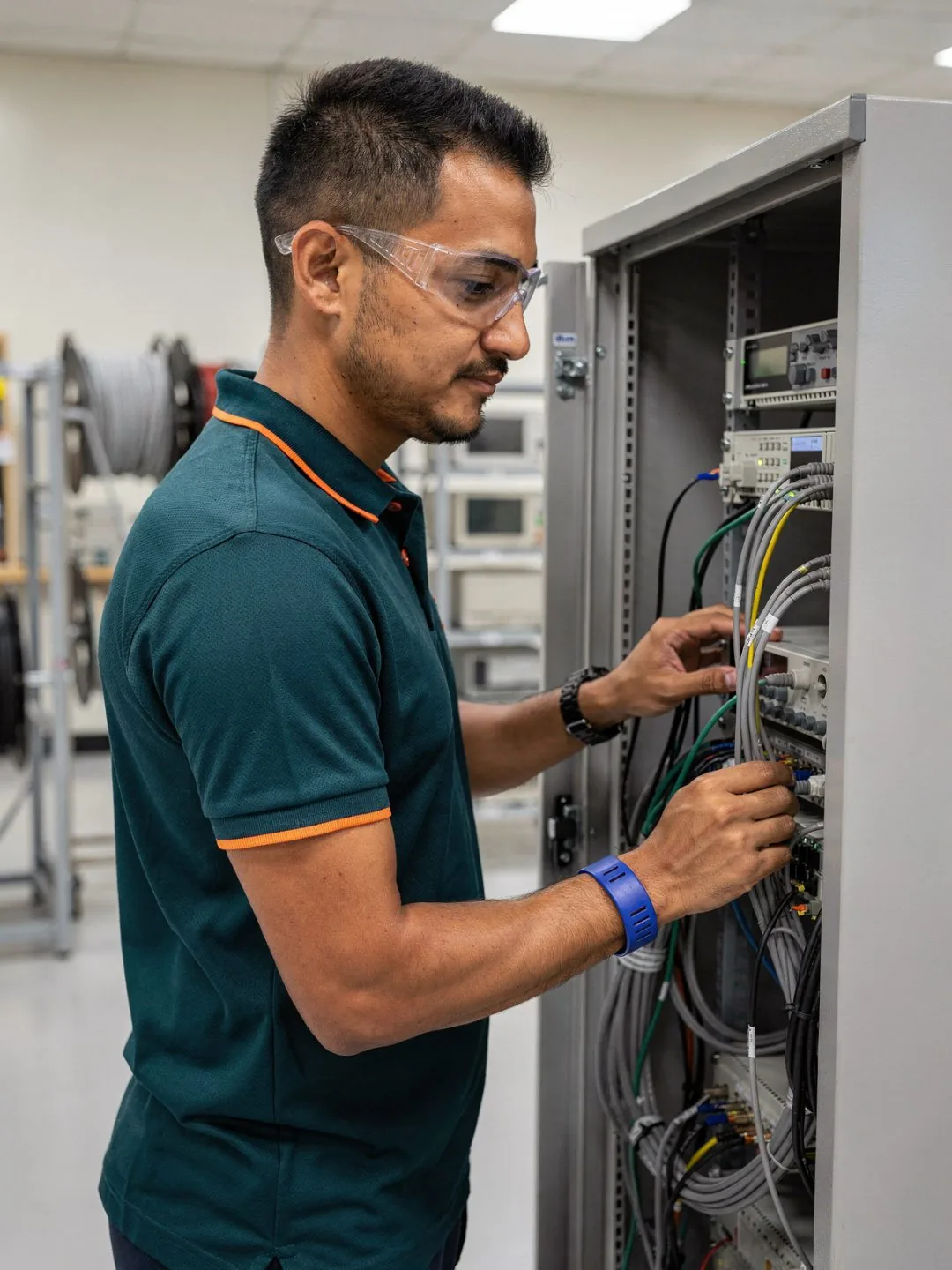
Telecom networks run on hardware that cannot fail. The cabinets, modules, power distribution units, and integrated systems that make up network infrastructure need to meet exacting standards for signal integrity, thermal performance, and mechanical durability — because a single hardware failure at a cell site or central office affects thousands of connections.
GPW assembles that hardware. Our Monterrey facility builds telecom equipment across a range of complexity: from single-shelf network modules to fully integrated outdoor cabinets with power, cooling, and fiber management systems. Every program follows documented assembly procedures, every unit passes through defined test protocols, and every build is traceable from incoming components through final shipment.
This is assembly built for telecom. GPW understands that carrier-grade means zero tolerance for workmanship defects, that equipment rated for outdoor deployment needs every seal and gasket installed correctly, and that network hardware ships on schedules dictated by rollout timelines — not production convenience. Your hardware is built right, tested thoroughly, and delivered on time.
What Is Telecom Hardware Assembly?
Telecom hardware assembly is the process of integrating mechanical, electrical, and optical components into finished network equipment or sub-assemblies — cabinets, shelves, modules, power distribution units, fiber management systems, and system-level builds. It takes individual parts — sheet metal enclosures, PCBAs, backplanes, connectors, power supplies, fans, cabling, and structural hardware — and builds them into a tested, documented unit ready for deployment in carrier networks. For OEMs that design telecom equipment, contract assembly transfers the build process to a specialized partner so the OEM can focus on product development and network customer relationships.
Telecom Infrastructure Is Expanding — Assembly Capacity Needs to Keep Pace
The telecom industry is in the middle of a sustained infrastructure build. 5G network densification, fiber-to-the-premises expansion, edge computing deployments, and legacy network upgrades are driving demand for physical hardware at volumes that many OEMs cannot fulfill with their existing assembly capacity. The equipment itself has grown more complex — today’s telecom hardware integrates high-speed digital interconnects, precision thermal management, optical fiber routing, and power conditioning systems in a single chassis.
For U.S. telecom OEMs, this creates a dual challenge. Domestic assembly capacity is constrained and expensive — skilled technicians command premium wages, and facility costs in major U.S. markets continue to climb. Offshore assembly in Asia introduces 8-12 week lead times that conflict with the aggressive rollout schedules that carriers impose on their equipment suppliers. A delayed cabinet shipment does not just miss a delivery date — it pushes back a site activation that the carrier has already committed to its subscribers.
Continue reading Show less
The result is growing demand for nearshore assembly partners who can deliver carrier-grade build quality at competitive cost, with lead times measured in days rather than months. Telecom OEMs need a partner who understands that a fiber cable routed incorrectly inside a cabinet creates signal degradation that surfaces only after deployment — and that the cost of a field repair on a cell tower exceeds the cost of the original assembly by an order of magnitude.
GPW was built for this type of work. Precise, process-controlled, and focused on getting every build right the first time — whether the program calls for 50 cabinets or 5,000 modules.
What GPW Builds — Cabinets, Modules, and Integrated Telecom Systems
GPW assembles telecom hardware across a range of product types and complexity levels. Every program starts with a documented process plan and ends with a tested, traceable unit ready to ship to the carrier or installation site.
Telecom Cabinet and Enclosure Assembly
Cabinet assembly is one of GPW’s core telecom programs. A typical telecom cabinet integrates a structural enclosure — indoor or outdoor rated — with internal racking, power distribution, cable management, thermal systems, and equipment shelves populated with active and passive components.
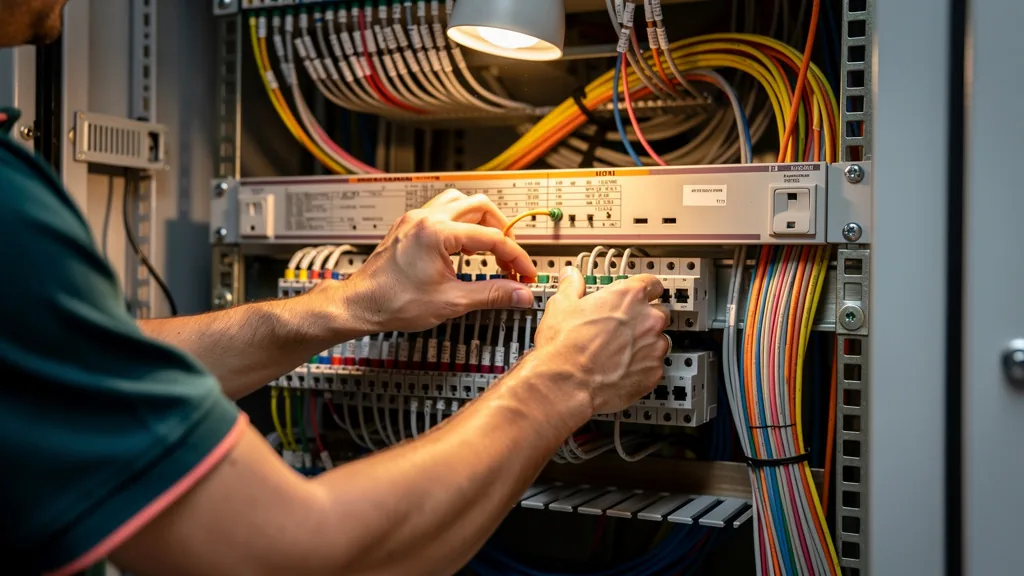
GPW’s cabinet assembly process covers structural assembly, equipment mounting, power wiring and distribution, signal cable routing, fiber management, thermal system installation, labeling, and functional verification against the customer’s acceptance test procedure. Cabinets are assembled to meet the environmental rating specified by the OEM — NEMA 3R, NEMA 4, or IP-rated housings for outdoor deployments where weather sealing, UV resistance, and thermal cycling are critical to equipment longevity.
For OEMs producing multiple cabinet configurations, GPW manages variant control across the product family — ensuring the correct BOM revision, assembly sequence, and test protocol are applied to each configuration without ambiguity.
Network Module and Shelf Assembly
Telecom systems are built on modular architectures — plug-in modules, line cards, shelf assemblies, and blade systems that slide into cabinet frameworks. GPW assembles these modules individually: PCBA integration into housings, connector installation, EMI shielding, thermal interface application, and unit-level functional testing before the module ships to the OEM or directly into a cabinet build.
Module assembly requires attention to ESD protection throughout the build process. GPW maintains ESD-controlled workstations with continuous monitoring, and every operator handling sensitive components follows documented ESD protocols verified through regular compliance audits.
Power Distribution and Thermal Management Integration
Telecom hardware depends on reliable power conditioning and thermal management. GPW integrates power distribution units — DC power plants, rectifier shelves, battery backup interfaces, and circuit protection systems — into cabinet builds. Thermal management integration covers fan tray installation, airflow path verification, heat exchanger mounting, and thermal performance validation under load conditions specified by the OEM.
Fiber and Cable Management Systems
Modern telecom equipment routes both copper and fiber cabling within enclosures. GPW installs fiber management systems — splice trays, fiber routing guides, patch panel assemblies, and cable strain relief — following the OEM’s routing specifications and bend radius requirements. Copper cabling follows defined routing paths with proper separation from power conductors to maintain signal integrity.
GPW applies this same cable management and enclosure integration discipline across multiple verticals — including industrial equipment and energy sector hardware — which means your telecom program benefits from assembly processes refined across thousands of builds, not just telecom-specific experience.
Precision-Machined RF and Cabinet Components for Telecom — Coordinated, Documented, Delivered
GPW coordinates precision machining for U.S. telecom OEMs through a vetted network of Monterrey machine shops — GPW owns the engineering (DFM), quality governance, material sourcing, and delivery. The same RF housings, waveguides, base-station brackets, and cabinet hardware that go into your network equipment are machined under one accountable partner, with scalable capacity and no single-shop bottleneck.
Machined through the managed network, then assembled and tested in-house, GPW closes the loop from raw stock to finished telecom unit — one supplier, one quality system, one point of accountability across both capabilities.
Machining Processes for Telecom Hardware
Telecom hardware depends on machined parts where dimensional accuracy drives signal integrity and environmental survival. The network GPW coordinates delivers milled RF housings and waveguides with internal geometry held to tight tolerances, turned coaxial fittings and RF connector bodies, and fabricated base-station enclosures, 19" rack panels, and cabinet brackets — with milling, turning, sheet-metal fabrication, and surface finishing matched to each part by GPW’s engineering team.
GPW defines the process, the inspection plan, and the acceptance criteria before any chips are cut, then routes each job to the shop in the network best suited to the geometry and volume. You issue one purchase order and GPW carries the accountability for the result.
Materials the Network Machines for Telecom
Telecom parts are specified for their electrical and environmental behavior, not just their strength — conductivity is a design-driving property, not incidental. GPW owns material selection and DFM behind the network:
- Aluminum 6061 and 6063 — RF housings and cabinet structures
- Brass 360 — connector bodies, RF fittings, and coaxial sleeves; excellent free-machining behavior and electrical conductivity
- Copper — RF waveguides, bus bars, and high-conductivity assemblies where maximum electrical and thermal performance is required
- Stainless 304 — outdoor base-station enclosures, pole-mount cabinets, and weather-exposed housings; corrosion resistance and structural durability through weather, UV exposure, and thermal cycling
GPW sources and certifies the stock, advises on the alloy and finish tradeoffs during a free DFM review, and documents the material traceability for every lot — so the part that ships matches the spec the network machined it to.
RF and Shielded Enclosure Design for Signal Integrity
An RF or telecom enclosure machined from a single billet has continuous walls — no seams to leak through. The network machines precision gasket grooves that hold consistent conductive-gasket compression around the full perimeter, with mating faces held flat to 0.001–0.002 inch so the seam closes completely. Conductive finishes — chem film, electroless nickel, zinc-nickel — complete the shield.
The result is shielding performance a gapped sheet-metal box cannot match. GPW specifies the groove geometry, flatness callouts, and finish during the DFM review — before the first part is cut.
Quality, Documentation & Accountability
Quality governance stays with GPW across every shop in the network. GPW sets the inspection plan, runs dimensional verification with CMM reporting and GD&T callouts enforced on critical features — PCB hole true position, connector-cutout fit, heat-sink flatness, surface finish — and assembles the documentation package telecom procurement teams require: material certifications, RoHS compliance documentation, inspection records, and lot traceability from raw stock to finished part. A single inspection standard applies whether one shop or three run your parts, so the quality outcome does not vary with capacity.
Quality is governed today by documented procedures, documented work instructions, and the OEM’s own acceptance criteria — with first-article inspection, in-process checks, and full lot traceability on every program. We align to the quality requirements each customer program defines.
GPW responds to every RFQ within 48 hours with an initial program assessment.
Get a Quote for Your Telecom Hardware Program Get a Quote for Your Telecom Hardware ProgramWhat a Typical Telecom Hardware Program Looks Like at GPW
Telecom hardware programs vary in scope and deployment environment, but they share a common requirement: every unit must meet carrier-grade standards and ship on a schedule that aligns with network rollout timelines. Here are three representative examples.
Outdoor Macro Cell Site Cabinet
A U.S.-based telecom equipment OEM produces an outdoor cabinet deployed at macro cell sites across the country. Each cabinet houses a DC power distribution system, battery backup interface, fiber patch panels, equipment mounting shelves, and a forced-air cooling system. The cabinet is rated NEMA 3R for outdoor installation.
GPW assembles the complete cabinet: structural assembly with sealing verification, power distribution wiring, fiber management installation, thermal system integration, and a functional acceptance test that validates power delivery, thermal performance, and fiber continuity. Every unit ships with a test data package documenting all verification results. Monthly volume: 60-100 cabinets across 3 configuration variants.
Network Module Family for Central Office Equipment
An OEM designs a family of plug-in network modules used in central office switching equipment. Each module integrates a PCBA, front-panel connectors, EMI gaskets, a heat sink assembly, and an ejector latch mechanism. The OEM produces 8 module variants sharing a common form factor but with different circuit board configurations.
GPW assembles all 8 variants on a shared production line. Configuration control ensures the correct components, assembly sequence, and test parameters are applied to each variant. Assembly covers PCBA installation into the housing, connector and gasket placement, heat sink attachment with controlled thermal interface application, and functional testing including high-speed signal verification. Monthly volume scales from 500 modules at introduction to 2,000+ at steady-state production.
Indoor Distribution Frame Assembly
An OEM produces fiber distribution frames installed in telecom central offices and data center meet-me rooms. Each frame includes a structural chassis, fiber splice trays, patch panel arrays, cable management rings, and labeling per the OEM’s identification standard.
GPW assembles the complete frame: chassis preparation, splice tray installation, patch panel population, fiber routing with documented bend radius compliance, and visual inspection against the OEM’s workmanship standard. Finished frames ship in custom packaging designed to protect fiber components during freight transit. Monthly volume: 30-50 frames with seasonal spikes during carrier deployment windows.
Why Monterrey for Telecom Hardware Assembly — Speed, Cost, and Network Proximity
Telecom OEMs operate under carrier-driven timelines. When a carrier commits to activating 200 cell sites in a quarter, every cabinet, module, and distribution frame on that rollout schedule must arrive on time. The assembly partner you choose needs to deliver both cost discipline and schedule reliability that matches the pace of network deployment.
Cost-Competitive Production
Labor costs in Monterrey are 40-60% lower than comparable U.S. assembly operations. For labor-intensive programs like cabinet wiring, fiber management, and module assembly, that cost advantage translates directly to lower per-unit costs without compromising carrier-grade build quality. USMCA compliance provides preferential tariff treatment for assemblies entering the U.S.
Delivery Speed
GPW is two hours from Texas by road. Finished telecom hardware reaches Texas distribution points in 1-2 days by truck — compared to 8-12 weeks for ocean freight from Asian assembly facilities. That proximity gives telecom OEMs the ability to respond to carrier schedule changes, expedite orders for accelerated rollouts, and replenish inventory without the buffer stock that offshore lead times require.
Same-Timezone Collaboration
Your program manager at GPW works the same business hours as your U.S. engineering and supply chain teams. Design change approvals, production status updates, and quality issue escalation happen in real time — critical in an industry where a carrier’s site activation schedule does not wait for overnight email replies from a factory on the other side of the world.
Scalable Capacity
Telecom deployment volumes are cyclical — driven by carrier capex cycles, spectrum auctions, and technology transitions. GPW scales production to match your demand curve without minimum volume commitments that force you to carry inventory or absorb costs during low-demand periods.
Supply Chain Resilience
Adding GPW as a nearshore assembly partner diversifies your production footprint. Run programs in parallel across facilities, shift volume between locations in response to demand signals, or transition programs from constrained domestic facilities — the model adapts to your supply chain strategy.
Quality Systems Built for Carrier-Grade Reliability
Telecom hardware operates in mission-critical environments — outdoor cell sites exposed to weather extremes, central offices running 24/7, and edge locations with limited maintenance access. Assembly quality directly determines whether equipment performs reliably for its 10-15 year deployed life. GPW’s quality system ensures every unit leaves the production floor ready for carrier-grade service.
Process Documentation
Every assembly step follows documented work instructions displayed at the workstation. Operators execute each step in sequence, with verification required before advancing to the next station. Operators skip no step and alter no sequence.
Signal Integrity Verification
GPW performs continuity checks on every cable and fiber termination. For fiber assemblies, optical loss testing confirms that every connection meets the attenuation budget specified by the OEM. For copper cabling, point-to-point verification confirms correct routing and termination.
Environmental Sealing Verification
For outdoor-rated equipment, GPW verifies gasket placement, seal compression, and enclosure integrity according to the OEM’s environmental rating specification. Every seal point is inspected and documented before the unit advances to final test.
Functional Testing
GPW tests every unit against the customer’s acceptance test procedure before shipment. For cabinet builds, this includes power-up verification, thermal system operation, fiber continuity, and equipment communication checks where applicable.
Traceability
Every component and assembly step is traceable to the individual unit by serial number. GPW’s records include component lot numbers, operator identification, test results, and date codes — available for customer audit at any time.
Quality & Documentation
- Documented workmanship and inspection standards for electronic and harness assemblies
- First-article inspection with in-process checks against documented criteria
- Full serialized lot traceability and audit-ready documentation
- Builds aligned to the equipment and workmanship requirements each carrier program defines
- Customer-specific quality requirements via program-level quality plans
Telecom Hardware
Assembly FAQ
GPW assembles telecom cabinets, network modules, shelf assemblies, fiber distribution frames, power distribution units, and system-level equipment builds. Programs range from plug-in modules with a single PCBA to fully integrated outdoor cabinets with power, thermal, and fiber management systems. If it involves electromechanical integration for carrier network deployment, GPW builds it.
Yes. GPW assembles equipment rated for indoor central office environments and outdoor deployments requiring NEMA 3R, NEMA 4, or IP-rated enclosures. Outdoor cabinet assembly includes environmental sealing verification, UV-rated component selection, and thermal cycling considerations specific to exposed installation sites.
GPW installs and validates fiber management systems including splice trays, patch panels, fiber routing guides, and cable strain relief. Every fiber path follows the OEM's bend radius specification, and optical loss testing confirms that each connection meets the customer's attenuation requirements before the unit ships.
Yes. GPW scales production to match carrier deployment timelines. Staffing, workstation configuration, and material procurement adjust to support volume ramps -- from initial production at 50 units per month to sustained volumes of 1,000+ units during peak rollout periods. No minimum volume commitments restrict your ability to scale.
GPW maintains ESD-controlled workstations with continuous monitoring for all programs involving sensitive electronic components. Every operator follows documented ESD protocols, and compliance is verified through regular audits. ESD protection covers the entire assembly flow from incoming inspection through final packaging.
GPW uses a formal engineering change order (ECO) workflow. The engineering team assesses the impact on assembly sequence, materials, fixtures, and test protocols, then updates documentation and implements the change with defined effectivity. Most changes require no production interruption -- the transition integrates into normal production flow.
Assemblies ship by truck from Monterrey, reaching Texas distribution points in 1-2 days. GPW designs custom packaging for each product's weight, fragility, and fiber sensitivity, handles export documentation, and provides USMCA-compliant paperwork for preferential tariff treatment on shipments into the U.S..
Ready to Move Your Telecom Hardware Assembly to Monterrey?
Whether you are scaling production for a carrier rollout, launching a new telecom product, or looking for a cost-competitive alternative to domestic assembly — GPW is ready to build.
Our Monterrey facility handles the full scope of telecom hardware assembly: cabinet integration, module builds, fiber management, power distribution, thermal systems, functional testing, and packaging — under one roof, one quality system, and one program manager who works your hours.
Send us your requirements. A program manager will respond within 48 hours with an initial assessment.
No commitment. No minimum order. Engineering-driven quoting.